Company Legal Structures
What legal structure should I choose for my company?
Creating a business requires a structure.
We’ll study the main existing structures so that you can choose the one that best fits your project.
Note that this lesson doesn’t focus on a specific country, so business structures may be a little bit different in yours.We encourage you to look for data related to your country.
https://en.wikipedia.org/wiki/Sole_proprietorship
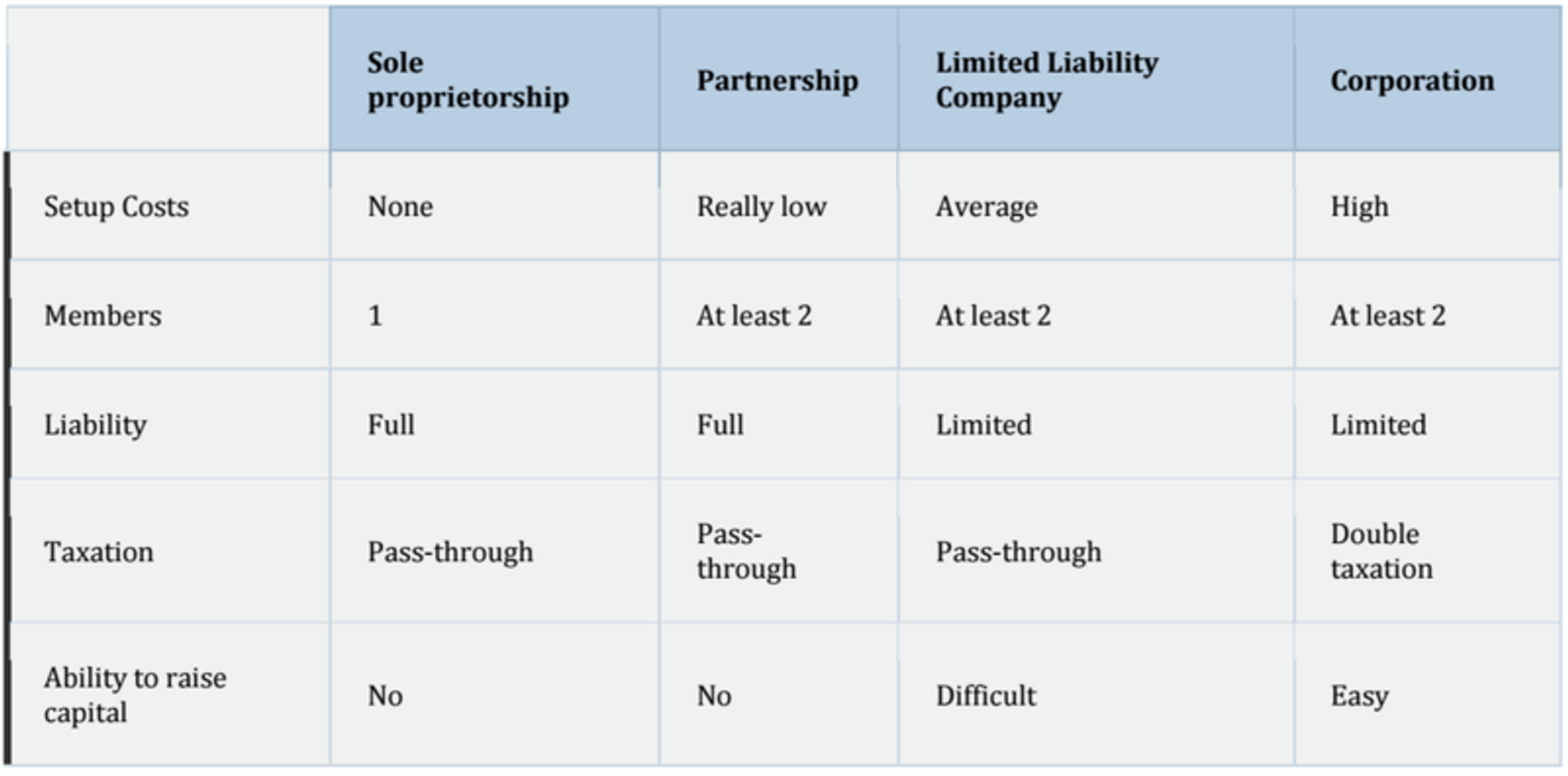
– No setup costs (or very low)
– Complete control (1 person)
– Full liability
– Pass-through taxation
Full Liability / Limited LiabilityFull liability means the owner of the company is accountable for the profits and losses of the company.
With limited liability, your personal assets are protected, which means that a creditor can’t come after your house.
Pass-through TaxationNo taxes are paid by the business, they pass directly to you.
This opposite is referred to as double taxation, because both the owner and the business pay taxes.
2) PartnershipA partnership involves two or more people who agree to share in the profits or losses of a business.
– Setup costs very low
– Two or more people
– Full liability
– Pass-through taxation
3) CorporationA corporation is a company or group of people authorized to act as a single entity (legally a person) and recognized as such in law.
https://en.wikipedia.org/wiki/Corporation
– Limited liability
– Ability to raise venture capital or conduct initial public offering
– Extensive record-keeping required
– Double taxation
https://en.wikipedia.org/wiki/Limited_liability_company
– Limited liability
– Pass-through taxation
– Difficult to raise capital
Question time!In which legal structure could a creditor come after your house if you are in debt?*
– Legal liability
– Tax implications
– Setup cost and administrative cost
– Flexibility
– Future needs